
Why DJ Lessons Build Smarter Kids Than Piano
by Jash Negandhi (October 15th, 2025)
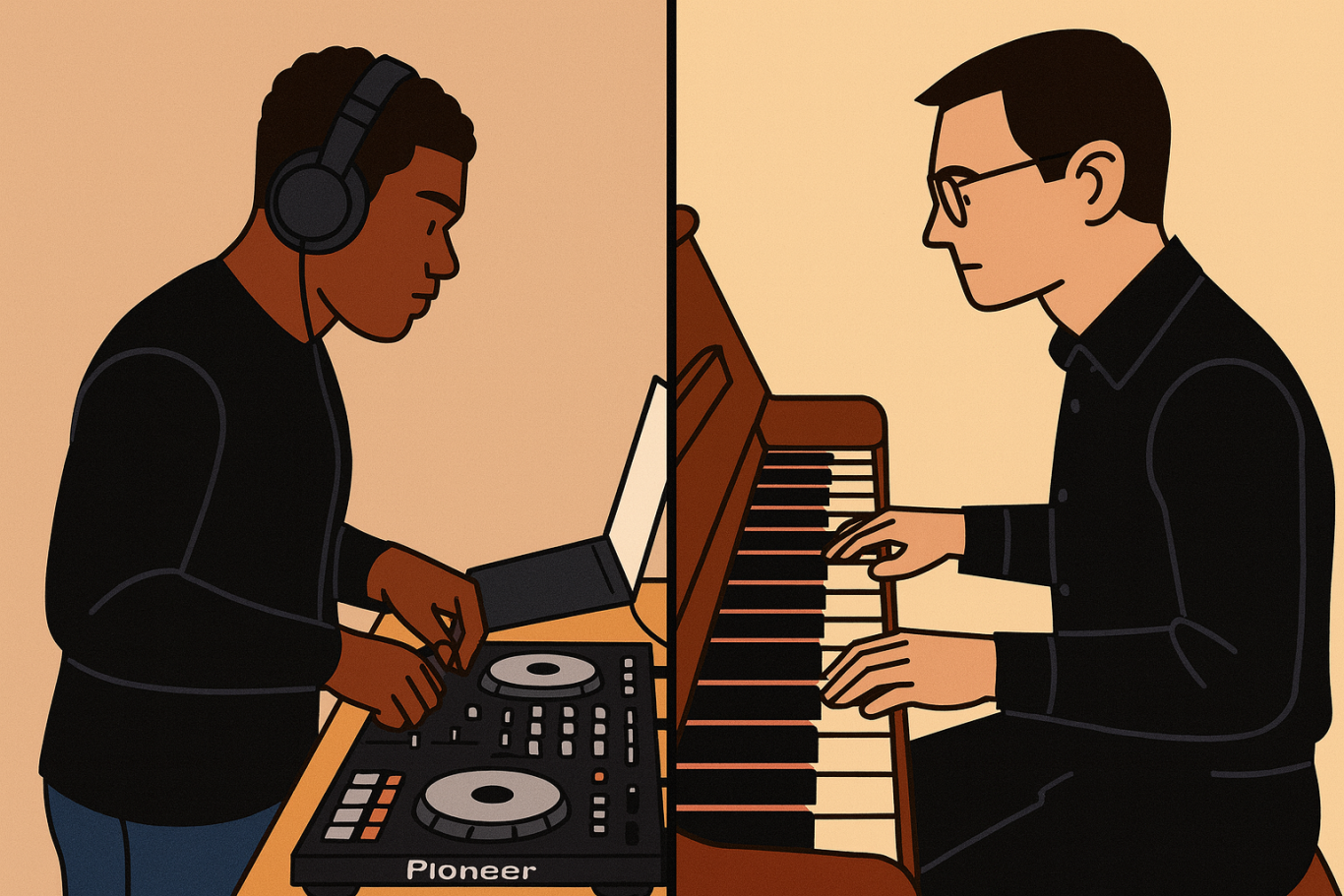
Your kid doesn't need a piano to build a musical brain.
The default assumption is wrong. Traditional instruments matter, but they're not the only path to cognitive enhancement. DJ lessons activate neural circuits that deliver comparable benefits through a completely different mechanism.
The science backs this up in ways most parents never see.
The Neuroscience Parents Need To Know
Brain development accelerates when children engage with music instruction. A five-year study from USC's Brain and Creativity Institute showed that music training enhances areas responsible for sound processing, language development, speech perception, and reading skills.
These aren't minor improvements. We're talking about foundational cognitive architecture.
DJ lessons tap into this same neurological advantage while adding layers traditional instruments miss. The combination of music theory, technology interaction, and creative problem-solving creates a unique cognitive load that strengthens multiple brain systems simultaneously.
What Makes DJ Training Different
The physical manipulation of equipment matters more than you'd think.
Turning knobs, pushing buttons, and scratching records develops hand-eye coordination in ways that benefit younger children specifically. These motor skills translate directly to improved physical control and spatial awareness.
But the cognitive benefits go deeper.
DJ software requires kids to think in layers. They're managing tempo, rhythm, transitions, and audio levels simultaneously. This multi-variable problem-solving strengthens executive function and working memory in real time.
Trial and error becomes the teaching method. Kids experiment, hear immediate feedback, adjust, and try again. This rapid iteration cycle builds resilience and creative confidence that extends far beyond music.
The Technology Literacy Advantage
Children learn to use professional-grade software and hardware. They become fluent in digital interfaces, audio engineering concepts, and technical troubleshooting.
This technological literacy compounds over time.
The same kid who learns to beatmatch at 10 approaches other technology with confidence and curiosity at 15. They've internalized that complex systems can be mastered through patient experimentation.
Musical genre exploration broadens their cultural awareness. DJs naturally dive into different styles, understanding context and history through sound. This creates appreciation for diversity that informs their creative outlook.
The Accessibility Factor
Here's what surprised me about the research: progress happens fast.
One parent taught their 10-year-old daughter to DJ, and she played school parties after only weeks of practice. That's not an outlier. The skill curve for basic DJ competency is remarkably achievable.
Most programs accept kids starting around age 10, though some begin as early as 6 for introductory equipment. The barrier to entry is lower than parents assume.
Equipment costs vary, but entry-level setups are more affordable than quality acoustic instruments. Digital controllers start around the price of a decent keyboard, and software often comes bundled.
The Performance Confidence Loop
Mastering new skills and performing for others creates a confidence feedback loop. Kids who successfully DJ at school events or family gatherings experience validation that reinforces creative risk-taking.
A confident child expresses themselves more freely. They're willing to experiment, fail, and iterate without fear of judgment.
Group lessons and DJ camps add collaborative elements. Kids combine creative ideas and learn to appreciate what peers create. This builds teamwork skills while maintaining individual creative expression.
The Long-Term Cognitive Investment
The creativity fostered through DJ lessons prepares kids for careers that value innovation and adaptability. Creative problem-solving skills matter across science, technology, business, and arts.
These transferable abilities compound over years.
The 12-year-old learning to mix tracks is developing the same pattern recognition and timing precision that benefits surgeons, engineers, and designers. The context is music, but the cognitive skills transcend domain.
Screen time becomes screen-free when kids use physical equipment. Turntables and controllers offer hands-on interaction that feels refreshingly tactile in a digital world.
What This Means For Your Decision
DJ lessons offer legitimate cognitive benefits backed by neuroscience research. They're not a replacement for traditional music education but a valid alternative with unique advantages.
The combination of motor skill development, technological literacy, creative problem-solving, and performance confidence creates a comprehensive developmental package.
Kids can start younger than you might expect and progress faster than traditional instruments allow. The accessibility and rapid skill acquisition make DJ lessons particularly appealing for children who struggle with patience or long practice requirements.
The brain-building happens whether your kid becomes a professional DJ or simply gains cognitive tools that serve them across domains.
That's the real value. Not the music career potential, but the neural architecture that develops along the way.