The New Practice Room: How Young DJs learn in a Tik Tok, Twitch and YouTube World
by Jash Negandhi (December 22nd, 2025)
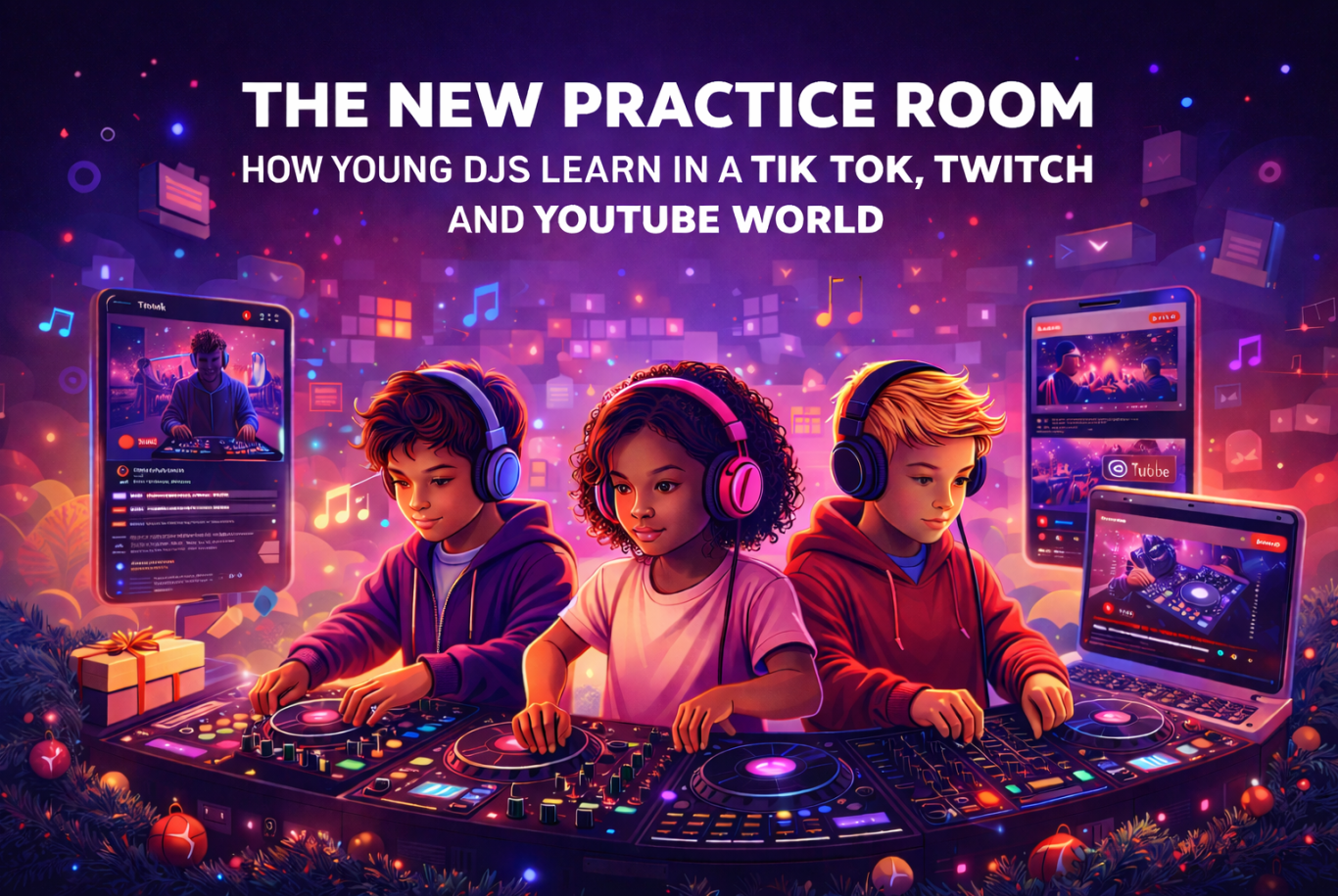
The practice room for young DJs has shifted from bedrooms full of vinyl to phones and laptops filled with TikTok, Twitch, and YouTube, and that shift is completely reshaping how they learn. These platforms now function as always-on classrooms, mentorship networks, and performance stages all at once, especially for Gen Z and younger teens.
Where Young DJs Actually Spend Time
Gen Z and today’s teens live on video-first platforms, which means their “practice environment” is often the same place they scroll for entertainment. Studies show that YouTube, TikTok, and Instagram are the dominant platforms for Gen Z, with YouTube usage around 84–86% and TikTok usage above 70% in many samples. Among U.S. teens 13–17, about 90% report using YouTube, and roughly 73% say they go on YouTube daily, making it the most widely used and visited platform in that age group.
TikTok and Instagram Reels are where young people discover new music, trends, and creators, so DJ content that appears there feels native rather than “educational.” More than 2 in 5 Gen Z consumers say they get news from social media every day, highlighting how social platforms have replaced traditional sources of information and discovery.
YouTube: The New DJ Classroom
YouTube has effectively become the default how‑to library for skill-based learning, including DJing. Research on YouTube in education finds a strong correlation between ease of use, perceived usefulness, and learning motivation, with one study reporting that these factors together explain around 78–80% of the variance in students’ learning motivation. Students report that YouTube’s accessibility (anytime, anywhere) and interactive features make explanations clearer and keep them more engaged than traditional lectures.
For young DJs, this translates into a few patterns:
• They often learn core techniques (beatmatching, EQ, phrasing) by following step‑by‑step tutorials paused and replayed in real time with their controller or software open.
• They use playlists and channels as informal “courses,” even if the creator never calls it a course, binge‑watching multiple related videos in a single session to solve a specific problem.
• They search YouTube not just for technical DJ skills but also for related topics like music theory basics, track organization, branding, and content creation, folding it all into their practice time.
Because YouTube reduces friction—no login paywall, searchable by phrase, and free—young DJs are far more likely to start experimenting immediately after a video instead of waiting for a scheduled lesson. This “watch, imitate, tweak” loop becomes the backbone of their practice.
TikTok: Micro‑Lessons and Inspiration
TikTok reshapes practice by compressing ideas into 15–60‑second moments that are easy to copy, remix, or build upon. Gen Z’s adoption of TikTok is massive, with usage regularly reported above 70% and daily usage levels rivaling YouTube among younger users. Social media studies note that video‑first platforms like TikTok dominate Gen Z’s screens, particularly for entertainment and discovery.
For young DJs, TikTok usually plays three roles:
• Idea generator: Short clips of transitions, mashups, or “how did they do that?” routines spark specific practice goals (for example, recreating a transition or effect shown in a clip).
• Feedback loop: Posting a quick routine and seeing immediate comments, likes, and saves becomes a motivating metric that can push them to refine certain skills.
• Trend radar: Since more Gen Z users are turning to platforms like TikTok for news and product discovery, DJs also absorb what sounds, songs, and aesthetics are currently resonating.
The downside is that attention is fragmented. Skills that require slow, deliberate practice—such as detailed phrasing analysis or deep crate digging—can be overshadowed by the pursuit of flashy, short‑form content. Still, when guided properly, TikTok can be used intentionally: assigning students to learn one transition they discovered and then expand it into a full‑length mix is one way to harness the platform rather than fight it.
Twitch: Practice as Performance and Community
Twitch introduces a different dimension: live, interactive practice. Even though Twitch originally took off around gaming, it has become a general live‑streaming platform with music streams, “study with me” sessions, and DJ sets. Twitch viewers watched around 18–20 billion hours in recent yearly counts, showing how deeply embedded the platform is in youth culture.
A meaningful portion of Twitch’s user base is young. Estimates suggest that about 11% of Twitch users are 13–17, and around 41% of users overall are in the 16–24 age range, making it a significant hangout space for teens and young adults. What sets Twitch apart is the real‑time chat; Twitch itself highlights chat as a crucial component that creates niche communities and makes viewing a social experience rather than passive consumption.
For young DJs, that means:
• Practice can happen “in public,” where they test new sets, transitions, or routines in front of a small but engaged digital audience.
• They can watch other DJs build sets from scratch, troubleshoot gear issues, or respond to live song requests, learning by observing decision‑making in real time.
• Community feedback through emotes, chat reactions, and recurring viewers can sustain motivation in ways solitary practice rarely does.
This turns the practice room into a hybrid of rehearsal, performance, and peer learning. Instead of playing alone for an hour, a young DJ might stream a “practice session,” answer questions in chat, and treat the whole process as learning together with viewers.
How This Changes Practice Habits
Because nearly all Gen Z engages with at least one social media platform daily—one report puts this at about 94%—practice no longer feels like a separate, offline ritual; it is threaded through their everyday media consumption. More than half of young viewers say they watch less regular TV specifically because time goes into platforms like YouTube and TikTok, indicating that these environments have become the default for both entertainment and self‑directed learning.
This has several educational implications:
• On‑demand over scheduled: Young DJs expect to solve problems instantly via search (“how to fix off‑beat mixes,” “Serato cue point tips”) instead of waiting for weekly lessons.
• Visual and bite‑sized: They prefer short, high‑impact lessons, and often skip long, talk‑heavy explanations in favor of concise, visually demonstrated skills.
• Blended identity: They are not just “students”; they are viewers, creators, and performers. The same platform that teaches them also hosts their content and their audience.
Educators who design DJ programs around this reality—combining structured curricula with platform‑native content and assignments—tend to meet students where they already are instead of dragging them into formats that feel outdated.
Practical Takeaways for DJ Education
For a school, academy, or private instructor looking to support young DJs in this TikTok‑Twitch‑YouTube world, a few strategies stand out:
• Integrate YouTube as an official resource by curating playlists that match each week’s lesson, using research‑backed findings that YouTube can significantly boost motivation and engagement when structured well.
• Treat TikTok as a creative prompt engine by asking students to bring in one clip per week that inspires them, then turning that idea into a full transition, routine, or short set.
• Use Twitch‑style interactivity—even if not streaming—by adding live Q&A, song requests, and “crowd” decision‑making into practice sessions to mirror the social aspects that make streaming so compelling.
• Talk openly about attention, wellness, and intentional use of social media, noting that many Gen Z users both love and question platforms like TikTok, with nearly half in some surveys expressing mixed feelings about its impact.
The new practice room is no longer a physical space alone; it is a network of screens, communities, and creators where learning, performing, and hanging out blur together. DJ education that embraces this reality—while still grounding students in fundamentals like timing, listening, and musicality—gives young DJs the best of both worlds: deep skill and platform‑native fluency.