
Understanding Performance Anxiety
in Young Musicians
by Jash Negandhi (November 14th, 2025)
What Performance Anxiety Really Is—and Why It’s Growing
Performance anxiety has quietly become one of the most widespread challenges facing young musicians today. While a little nervousness before stepping on stage is normal, many students experience something much more intense—a level of fear that changes the way they learn, practice, and participate in music. When parents search for information about “music performance anxiety in kids” or “why teens fear performing,” what they’re really uncovering is a complex psychological response that affects countless students across all styles of music.
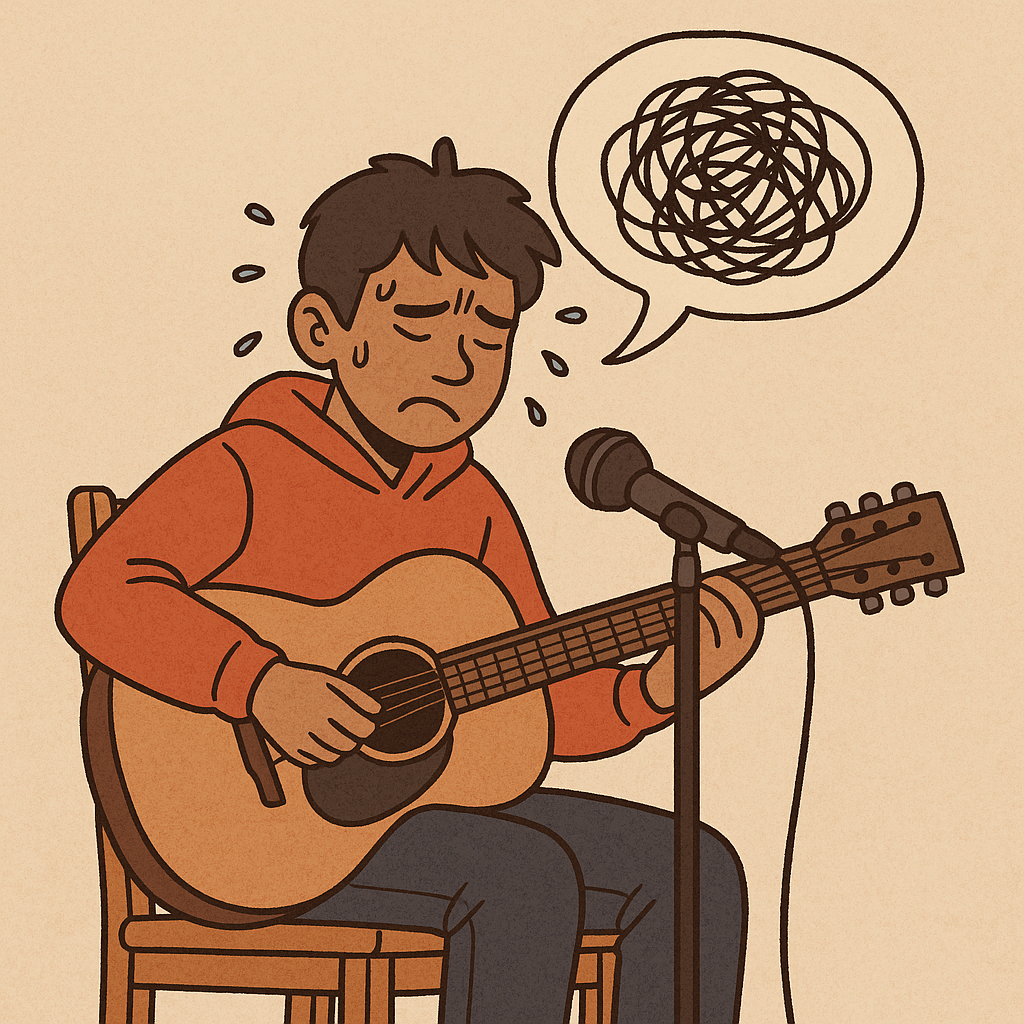
Performance anxiety is considered a form of social anxiety that is triggered when someone expects to be evaluated or watched. In music, this can appear during recitals, auditions, ensemble rehearsals, private lessons, or even simply practicing in a room where others can hear. Students describe symptoms like shaking hands, racing heartbeat, sweaty palms, mental blanking, and an overwhelming fear of making mistakes. Research published in the International Journal of Music Education suggests that up to 70% of musicians will experience significant performance anxiety, and the prevalence is especially high among teens. As students begin comparing themselves to peers, pressure and self-consciousness naturally grow.
How Social Media Makes Today’s Students More Vulnerable
One reason performance anxiety is rising so quickly among youth is the heightened sense of visibility in the digital age. Today’s students know that any performance—good or bad—can be recorded, posted, and replayed online. This shifts the stakes dramatically. Instead of worrying about a small room of listeners, kids worry about the possibility of an audience that extends far beyond the moment. Surveys on youth mental health show a 30–40% rise in social anxiety over the past decade. Fear of embarrassment and fear of “messing up” are now among the top anxiety triggers for teens. This affects students in music lessons, school bands, choir programs, private instruction, DJ courses, and even online music classes.
How Different Music Training Styles Influence Anxiety
Another factor is the structure of the learning environment itself. Classical music training, for example, has been shown to produce higher levels of performance anxiety compared to contemporary or improvisation-based methods. A study from the Royal College of Music found that classical students report more stress, largely because classical repertoire demands precision. Mistakes are obvious and often feel unacceptable. Students perform memorized pieces under high scrutiny, and their progress is frequently evaluated through recitals and exams. This creates what researchers call a “high-threat environment,” which fuels anxiety.
By contrast, students learning in modern, flexible formats—such as beat-making, DJing, songwriting, or improvisation—tend to experience lower anxiety. These styles embrace interpretation, personalization, and real-time creativity. When the structure is less rigid, students feel freer to experiment without fear of failure. This aligns with current studies showing that creative autonomy reduces performance-based stress and increases long-term engagement in music lessons. It also reflects the growing movement toward adaptive music education, which focuses on expression rather than perfection.
What Happens in the Brain During Performance Anxiety
To understand why performance anxiety feels so overwhelming for kids and teens, it helps to look at the neurological process behind it. When a student anticipates a high-pressure performance, the brain’s amygdala interprets the situation as a threat. This activates the fight-or-flight response, releasing cortisol and adrenaline into the bloodstream.
These stress hormones cause physical symptoms—like shaking or difficulty breathing—that directly interfere with musical performance. Fine motor skills become harder to control. Working memory becomes less effective. Timing and coordination slip. The more a student tries to force a perfect performance, the more the body’s fight-or-flight response makes that goal impossible. This is why parents often hear: “I played it perfectly at home, but then I froze.”
Which Students Are Most Prone to Performance Anxiety?
Certain students are more susceptible to performance anxiety. Personality traits like perfectionism, high self-expectations, and fear of criticism increase vulnerability. Students who are academically high-achieving often struggle more because they apply the same pressure to music that they apply to schoolwork. Environments that emphasize competition, ranking, or comparison also elevate anxiety levels. Even well-meaning parental encouragement can unintentionally raise stress if it focuses more on the outcome (“Do well, don’t mess up”) than the process (“Have fun, express yourself”). Teenagers with broader anxiety symptoms also tend to feel musical stress more intensely.
Evidence-Based Strategies That Reduce Performance Anxiety
Fortunately, research offers several proven strategies to reduce performance anxiety in music students.
• Gradual exposure. Instead of saving performances for rare, high-stakes moments, students benefit from frequent, low-pressure opportunities—playing for a friend, recording short clips, or performing small sections rather than full pieces.
• Reframing mistakes. When students understand that errors are part of learning and not personal flaws, the brain’s threat response decreases significantly.
• Breathing techniques. Slow, diaphragmatic breathing activates the parasympathetic nervous system, calming the body’s stress chemistry.
• Simulated performance practice. Mock recitals, trial runs, and performing for supportive peers help normalize the performance environment.
• Cognitive-behavioral approaches. These techniques help students challenge unrealistic thoughts (“Everyone will judge me”) and replace them with grounded beliefs (“Most people want me to succeed”).
• Supportive learning environments. Students thrive when teachers emphasize creativity, growth, and exploration over flawless execution.
How Anxiety Drives Students Away From Music
Performance anxiety also contributes significantly to music dropout rates. Studies tracking long-term participation show that nearly 50% of students quit music by age 17, and negative performance experiences are among the strongest predictors. Many teens report loving music but hating the stress that comes with performing it. This emotional conflict pulls them away from something they otherwise enjoy.
Creating Music Environments Where Students Feel Safe to Thrive
Understanding the data behind performance anxiety helps educators, parents, and students create healthier musical experiences. When young musicians feel supported, empowered, and free to express themselves—rather than pressured to be flawless—they not only perform better, but they also remain engaged with music longer. Performance anxiety isn’t a sign of weakness; it’s a natural response the brain can learn to navigate with the right mindset and environment.