Online vs. In-Person Music Lessons:
Which Is Right for You?
by Jash Negandhi (October 27, 2025)
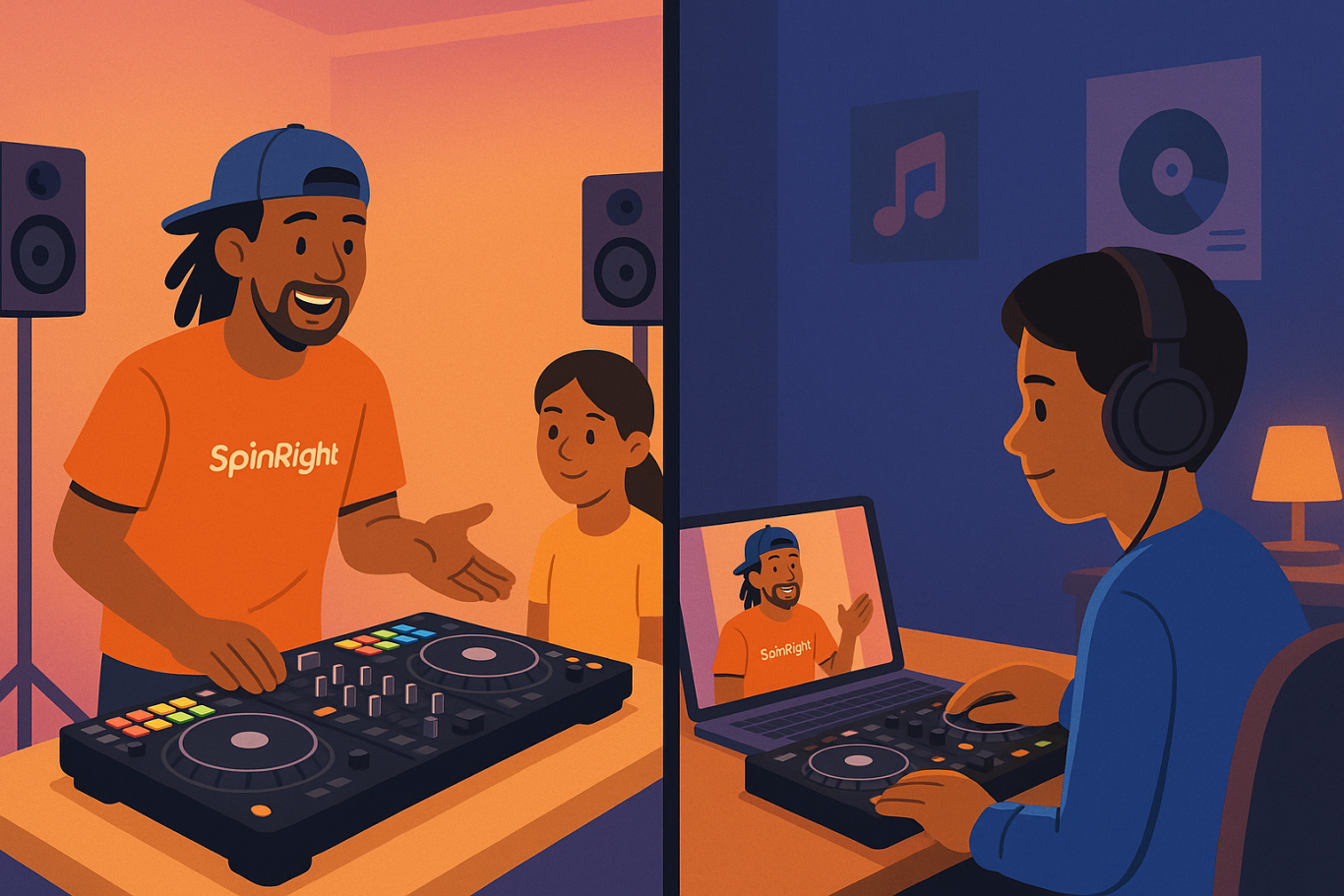
Over the past decade, music education has experienced a complete remix. What used to happen exclusively in studios and classrooms has now expanded into living rooms, laptops, and mobile apps. From YouTube tutorials to one-on-one Zoom lessons, students today can learn virtually any instrument — or even how to DJ — without ever leaving home. For many families and aspiring musicians, that kind of access is revolutionary. But it also raises a big question: is learning online really as effective as learning in person?
The truth is that both formats offer powerful advantages. Online lessons give students flexibility, affordability, and access to incredible teachers from anywhere in the world. In-person lessons provide structure, feedback, and a sense of community that screens can’t replicate. To decide which one fits best, it helps to understand what makes each approach unique — and how your learning style, goals, and personality all play a role.
The Case for Online Lessons
Online music lessons have democratized learning in ways that were unimaginable a generation ago. The most obvious benefit is convenience. Students can learn anywhere, anytime, whether it’s squeezing in a 30-minute session between school and dinner or taking lessons while traveling. There’s no commute, no setup stress, and no need to lug gear across town. Many teachers record their sessions, allowing students to rewatch tricky sections, which is a huge advantage when practicing independently.
Cost is another big factor. Without the overhead of renting space or commuting, online instructors can offer more affordable rates. Some even provide flexible packages or subscription plans that make it easier to stay consistent — especially for families trying to encourage a child’s musical interest without committing to a long-term financial burden.
Online learning also opens the door to a wider range of teachers. You’re no longer limited to who’s nearby. You might study guitar with someone in Nashville, piano with a teacher in New York, or take DJ lessons from Orange County instructors like those at SpinRight Academy, all from the same laptop. This ability to choose based on fit, not geography, often leads to more inspired and productive lessons.
Technology itself has also made online learning more engaging. Instructors can screen-share to demonstrate techniques in software like Serato or Ableton, annotate waveforms, or give real-time critiques of a mix. Students can record and submit assignments digitally, receive time-stamped feedback, and even collaborate with classmates through shared playlists or remix challenges. For self-motivated learners who enjoy experimenting, online learning is a creative playground.
Still, that same independence can be a double-edged sword. Without a teacher physically present, it’s easy to lose focus or drift into bad habits unnoticed. That’s where in-person lessons still hold a major advantage.
The Case for In-Person Lessons
There’s something irreplaceable about being in the same room as your instructor — hearing the subtle nuances of sound, feeling the bass vibrate through the speakers, or getting direct guidance on how to move your hands. For DJs in particular, those tactile experiences matter. The muscle memory required to scratch, crossfade, or beat-match can only truly develop through hands-on repetition, guided by someone who can immediately correct your form.
In-person instruction also brings an element of human connection that technology simply can’t emulate. A skilled teacher doesn’t just show you what to do — they sense when you’re struggling, celebrate your breakthroughs, and adapt in the moment to keep you motivated. They can read your energy, offer encouragement, or challenge you right when you need it most. For young learners, especially, this kind of responsive mentorship can mean the difference between sticking with lessons or giving up.
The physical environment itself plays a role too. When you step into a studio filled with DJ decks, turntables, and colorful LED lighting, your mindset shifts. You’re entering a creative zone designed for focus. Compare that to practicing in your bedroom, where distractions are everywhere — phones, snacks, siblings, notifications. At SpinRight Academy, for example, students learn in a professional yet playful environment where every session feels like a mini-performance. That energy often sparks confidence and camaraderie that fuels long-term growth.
Finally, in-person lessons cultivate community. Learning music is as much social as it is technical. When students play together, exchange ideas, or perform for each other, they develop skills that go beyond technique: stage presence, collaboration, and the confidence to express themselves publicly. Those are lessons no screen can teach.
Learning Styles and Personal Fit
Every musician learns differently, and your learning style can dramatically influence which format works best. Visual learners might gravitate toward online platforms where they can replay demonstrations or follow along with tutorials. Auditory learners, who process information through sound, can thrive in either format as long as they get clear verbal explanations. Kinesthetic learners — those who learn by doing — benefit most from being physically present with their instructor, feeling the gear and responding to tactile cues.
Social learners usually prefer group classes where they can interact and feed off peer energy. Meanwhile, independent learners often excel online, where they can move at their own pace. Recognizing where you (or your child) fall on that spectrum makes it easier to choose a format that keeps motivation high and frustration low.
Why DJing Still Shines In Person
When it comes to DJing specifically, in-person lessons often hold a distinct advantage — at least at the start. Unlike traditional instruments, DJing is a performance-based art form that blends technology, rhythm, and intuition. Learning how to read a crowd, time transitions, and physically manipulate equipment requires more than just watching videos. It’s about feel. The subtle resistance of a jog wheel, the crossfader’s tension, the pressure of your fingers on vinyl — these are sensations that can’t be replicated virtually.
That said, online lessons can still play an important supporting role. Intermediate students might use them to learn production skills, explore new software, or get creative feedback on mixes. Some DJs even combine live instruction with online mentorship from industry professionals, bridging gaps that once seemed impossible.
The best path, then, is often a blend: learn the fundamentals hands-on, refine your craft through digital practice, and keep the loop going. That’s the rhythm of real-world progress.
How to Decide What’s Right for You
Choosing between online and in-person lessons comes down to lifestyle, goals, and learning preferences. Ask yourself a few key questions: What’s your primary motivation — fun, confidence, or a potential career? Do you have space and gear at home to practice effectively? How self-disciplined are you when learning solo? Do you crave community and feedback, or do you prefer quiet experimentation?
If you value structure, accountability, and personal connection, in-person lessons are likely the better fit. If flexibility and independence are your top priorities, online lessons might serve you better. And if you want the best of both, hybrid programs like SpinRight Academy’s DJ training offer a perfect balance.
The SpinRight Philosophy
At SpinRight Academy, our approach is simple: make learning music both fun and foundational. We know every student’s rhythm is different, so our programs combine the human energy of in-person instruction with the convenience of modern technology. Students get access to real DJ equipment, creative challenges, and one-on-one mentorship — along with digital tools that help them