
From Scrolling to Spinning: How OC Parents Are Turning
Screen Time Into Skill Time
by Jash Negandhi (June 27th, 2026)
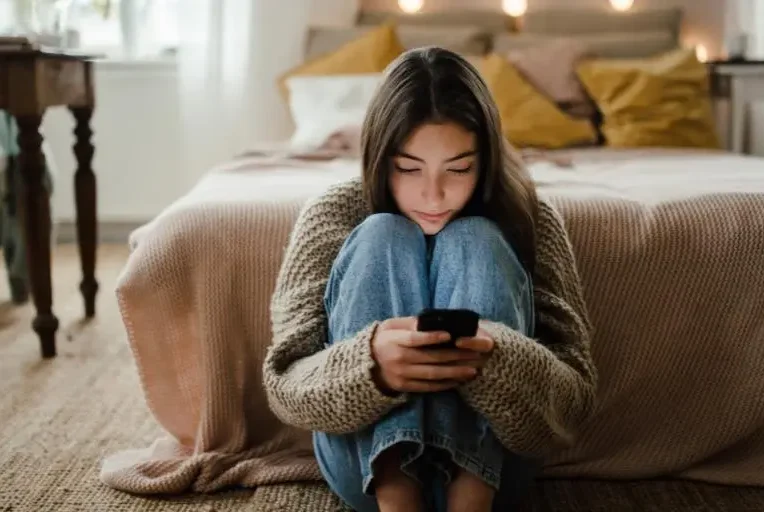
Your kid isn't lazy. They're not "addicted" in some vague, hand-wavy sense either. They're responding exactly the way a brain wired for novelty and reward is supposed to respond to a device engineered to keep it open. That's the part most screen-time lectures miss — and it's the part we want to start with before we get to the good news.
The numbers are bigger than most parents think
If you feel like you're losing a tug-of-war with a glowing rectangle, the data backs you up:
- Teens aged 13–17 now average more than 7 hours a day on their phones, much of it on TikTok, Instagram, and Snapchat, according to Pew Research Center.
- Common Sense Media's most recent census put total entertainment screen time for 13- to 18-year-olds at 8 hours and 39 minutes a day — up from 6 hours 40 minutes a decade earlier.
- A Gallup survey of more than 1,500 U.S. teens found the average teen logs roughly 4.8 hours a day on social media specifically, with almost 2 of those hours on TikTok alone.
- 38% of teens admit, in their own words, that they spend too much time on their phone. They know it. They just don't have an off-ramp.
- CDC-reviewed research found that teens logging 4-plus hours of device time a day report meaningfully higher rates of anxiety (27.1%) and depression (25.9%) symptoms than lighter users.
There's also a gender split worth knowing. Common Sense Media's census found teen boys log around 9 hours 16 minutes of total daily screen time versus 8 hours 2 minutes for girls — but girls actually edge out boys on social media specifically, at roughly 5.3 hours a day versus 4.4. The platforms are different. The pull is the same.
None of this means screens are the villain. It means how a screen gets used matters more than how long it's used.
Not all screen time is created equal
Here's the distinction researchers keep coming back to, and it's the one most parents have never been told: passive screen time and active screen time are not the same thing, even when they look identical from across the room.
Passive screen time is one-directional. A teen watches a feed, the algorithm decides what's next, and the brain barely has to lift a finger. Studies including a JAMA Pediatrics analysis of kids ages 8 to 12 link heavy passive consumption to lower scores on executive function tests: the mental muscles behind focus, planning, and self-control.
Active screen time flips the script. It's goal-directed. The user decides what happens next, solves a problem, builds something, gets better at a skill through repetition. Research on active engagement with technology links it to improved attention, motivation, and school readiness, the opposite trajectory of doom-scrolling.
So the real question for parents isn't "how do I get my kid off their phone." It's "how do I get my kid to use a screen with their hands instead of just their thumb."
That's exactly where DJing comes in.
DJing is the most active screen time there is
Picture the difference. Scrolling: thumb flicks up, dopamine hits, repeat, zero output. DJing: hands on a Pioneer controller, eyes reading a waveform in Serato, ears catching a beatmatch a half-second before it locks in, brain already three songs ahead planning the next transition to keep a room moving. One is consumption. The other is creation, and it happens to live on a screen, which is exactly why it works as a bridge instead of a battle.
When a teen sits down for a private lesson at SpinRight Academy, here's what "screen time" actually looks like:
- Reading frequency spectrums and waveforms to find the perfect mix point
- Building a set list that has to land with an actual audience, not an algorithm
- Learning the gear professionals use — Pioneer controllers, Serato DJ Pro — the same software and hardware running OC's clubs and event stages
- Curating music with intention, which means studying genres, BPMs, and song structure instead of just consuming whatever autoplay serves up
- Getting real-time feedback and course-correcting on the spot, every single session
That last point matters more than people realize. DJing doesn't let you zone out. You can't half-pay-attention your way through a beatmatch. The format itself demands the kind of sustained, hands-on focus that passive scrolling slowly erodes.
Initiative is the whole point
Here's the word that ties this all together: initiative. Passive scrolling asks nothing of a kid except attention. DJing asks for decisions. What song next. How to read the crowd. When to build energy and when to pull back. Every set is a string of small choices a teen has to make and own, which is a very different muscle than swiping.
Music education research backs up what this looks like over time. Students who study music score higher academically and are 24% more likely to graduate. They also report gains in confidence, independence, perseverance, and personal responsibility, the exact traits that come from making something instead of just watching something. DJing pulls in everything music education offers and adds a layer of tech fluency and performance nerve on top, because eventually that mix gets played for real people at a real party, not just a practice room.
For the hobbyist teen building a bedroom setup, that confidence shows up at school. For the older student eyeing local gigs, it shows up on stage at an OC event. Either way, the screen stopped being something that happens to them and became something they direct.
What this looks like in Orange County
We see this shift constantly with students across OC. The kid who came in glued to a feed and started showing up early to lessons because they wanted to nail a transition before their next set. The screen didn't disappear from their life. It just switched roles, from babysitter to instrument.
That's the real win for parents. You're not fighting technology. You're redirecting it toward something your kid builds, gets better at, and eventually performs with skills that translate directly to local gigs, school events, and a creative outlet that actually holds their attention because they're the one steering it.
You don't need to take the phone away
This is the part that takes the pressure off. You don't need a screen-time lockdown or a confiscated charger to change the pattern. You need a replacement habit that's just as immersive as the feed but actually builds something . A private lesson does that in a single hour better than any parental control app ever could.
For the OC parent of a young hobbyist, this looks like a weekly session that turns "no more phone" into "let's see this week's mix." For the parent of an older teen who's outgrown bedroom practice, it looks like a clear next step toward playing an actual local set. Either way, the conversation at home shifts from a fight about limits to a conversation about progress.
If your son or daughter is glued to a phone and you want to see what happens when that same energy gets pointed at something active, that's exactly what we do here.
Claim your first lesson at spinright.org.